Smart meters are moving from optional upgrade to the default for every home, and the rules that come with them change how you can be billed.
Every home and small business in the National Electricity Market is due to have a smart meter by 2030. The Australian Energy Market Commission (AEMC) made the final rule on 28 November 2024, the accelerated rollout began in December 2025, with no upfront charge. As at October 2026, a smart meter is also what makes free midday power offers in NSW, QLD, SA and Victoria possible.
Key highlights
- The AEMC’s final rule, made 28 November 2024, requires universal smart meter deployment across the National Electricity Market by 2030 (AEMC).
- The reforms are being implemented progressively from December 2024 to July 2026, with the accelerated rollout starting in December 2025 (AEMC).
- Customers cannot be charged any upfront cost ahead of a smart meter installation (AEMC).
- For two years after installation, a retailer cannot move you to a new tariff without your explicit informed consent (AEMC).
- In NSW, your retailer must give at least four business days’ notice before installation, and the job normally takes about an hour (NSW Climate and Energy Action).
What the 2030 rule actually changes
Our earlier post on the AER’s smart meter rollout covers what a smart meter is and how installation works. This post looks at where the rollout is heading and what it means for your bills over the next few years.
The AEMC’s final rule has two core parts. The first is accelerated deployment: rather than waiting for old meters to fail one at a time, networks and metering providers replace them area by area, which the AEMC says brings economies of scale, avoids manual meter reading costs and supports faster power restoration after outages. The second is access to power quality data, so networks can see voltage and other conditions at the edge of the grid and manage rooftop solar, batteries and EVs more efficiently (AEMC).
Victoria and Tasmania were left out of the AEMC’s cost-benefit analysis because they already have their own acceleration programs (AEMC).
| Date | Milestone |
| 28 November 2024 | AEMC publishes final rule for universal smart meters by 2030 |
| December 2024 to July 2026 | Reforms phased in, including new customer safeguards |
| December 2025 | Accelerated rollout begins |
| 1 July 2026 | Solar Sharer Offer free hours begin in NSW, QLD and SA (CovaU offer) |
| 1 October 2026 | Victoria’s Midday Power Saver begins, smart meter required (CovaU offer) |
| 2030 | Target date for a smart meter at every customer site |
The new protections on tariffs
The biggest worry with smart meters has been bill shock from a sudden switch to a time-of-use or demand tariff. The final rule responds to that directly. For two years after your meter is installed, your retailer cannot move you to a new tariff unless you give explicit informed consent. After that, a retailer wanting to change your tariff must show historical bill comparisons of what you would have paid under the new tariff, plus practical information on managing your usage (AEMC).
The rule also lets state governments require designated retailers to keep offering flat tariffs to smart meter customers. If you are unsure how time-of-use pricing could affect you, our guides to peak and off-peak rates and demand tariffs walk through the maths.
Why a smart meter is now the key to free power hours
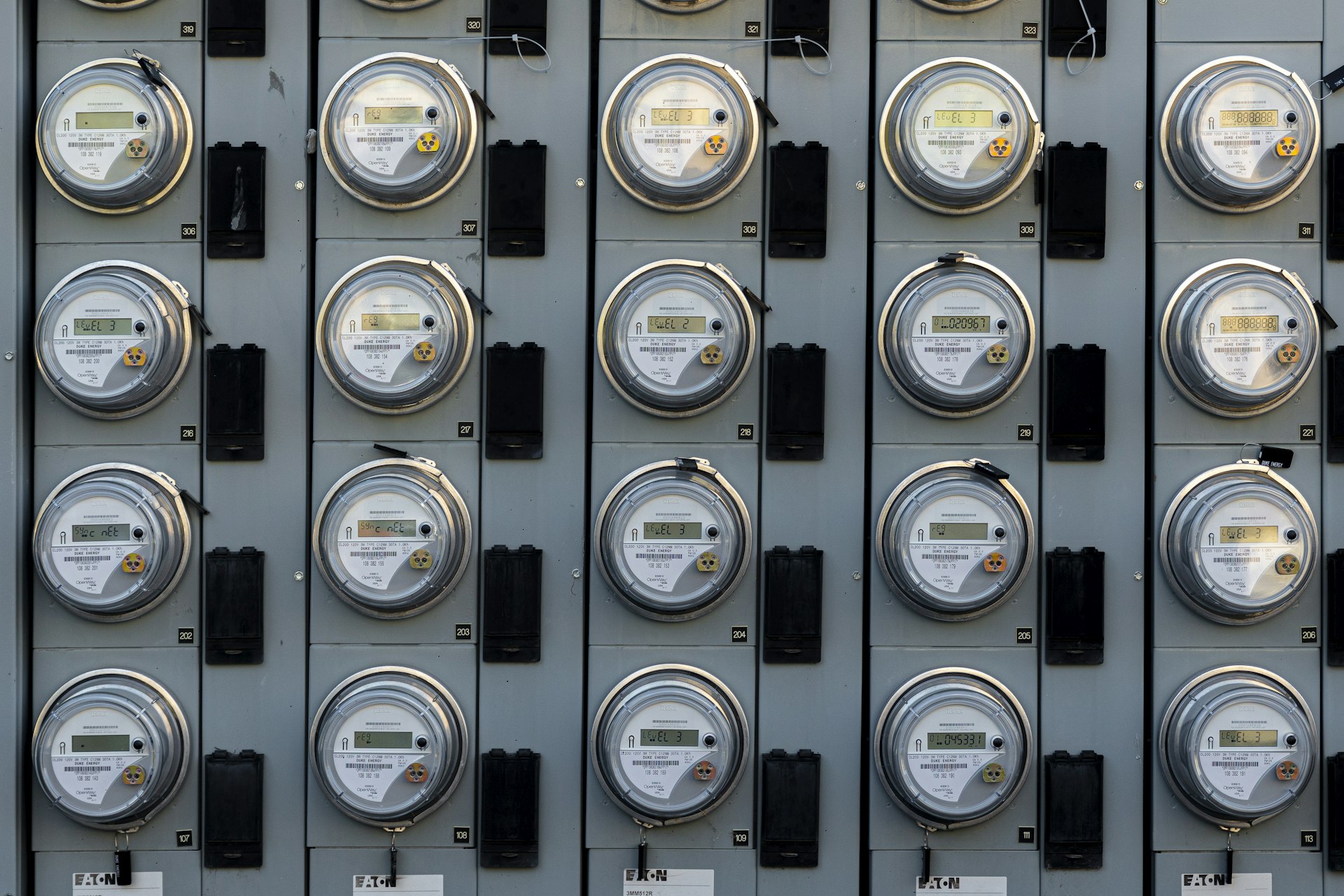
An old accumulation meter only records how much electricity you used between reads. It cannot tell whether you ran the dishwasher at noon or at 7pm. A smart meter records usage throughout the day, which is what any offer built around free or cheaper hours depends on.
That has become far more valuable in 2026. From 1 July 2026, the Solar Sharer Offer in NSW, QLD and SA gives three free hours of usage every day, up to 24 kWh: 11am to 2pm in NSW and QLD, and 12pm to 3pm in SA. In Victoria, the Essential Services Commission regulated Midday Power Saver started on 1 October 2026 with free usage from 11am to 2pm, up to 24 kWh, and it requires a smart meter. Supply charges still apply on both.
In practical terms, the smart meter is the gate. Households still waiting for one cannot schedule laundry, pool pumps, hot water or EV charging into free hours and be billed accordingly.
What to expect when it is your turn
NSW Government guidance says your retailer will contact you by letter, text or email at least four business days before installation, with a window of five business days. The installer will briefly switch off your power, the job normally takes about an hour, and if your meter box is safe to access you do not need to be home. Installers will never ask for payment or personal details. Renters with the account in their name are contacted directly, and if you have solar or your home was built after 2017 you most likely already have a smart meter (NSW Climate and Energy Action).
How CovaU can help
Once your smart meter is in, it is worth checking whether your current plan uses it. CovaU offers the Solar Sharer Offer in NSW, QLD and SA and the Midday Power Saver in Victoria, and for solar and EV households the SolarMax and EVMax plans both require a smart meter. You can compare options on our residential page, and Basics, Freedom and Super Saver plans have no exit fees if you later decide another structure suits you better.
CovaU’s 24/7 support line, 1300 689 866, can tell you whether your meter is already a smart meter and which plans it qualifies for.
Frequently asked questions
Will I have to pay for a smart meter in Australia?
Not upfront. Under the AEMC’s final rule, customers cannot be charged any upfront cost ahead of a smart meter installation under the rollout.
Will a smart meter put me on a time-of-use tariff?
Not without your say for the first two years. For two years after installation, a retailer needs your explicit informed consent to move you to a new tariff.
When will every home in Australia have a smart meter?
The AEMC’s target is universal smart meter coverage in the National Electricity Market by 2030, with the accelerated rollout running since December 2025.
Do I need a smart meter for free midday power?
For Victoria’s Midday Power Saver, yes, it is a stated requirement. More generally, any offer that prices usage by time of day needs a meter that records when you use power.
Sources
- AEMC: AEMC finalises landmark reform to accelerate smart meter rollout, 28 November 2024
- AEMC: Accelerating smart meter deployment rule change
- NSW Climate and Energy Action: Smart meter rollout
- CovaU: Solar Sharer Offer price plan, NSW QLD SA
- CovaU: Midday Power Saver, VIC
About CovaU Energy
CovaU Energy is a 100% Australian-owned company providing electricity and gas to homes and businesses across Australia. We offer competitive energy plans, top-rated 24/7 customer service, and no lock-in contracts. We also have incredible rewards for our new and existing customers. For more information about our electricity and gas plans, call 1300 111 688 to talk to our energy specialists or request a quote for the rates in your area. You may also compare plans and sign up here directly.