A home battery can pay for itself, but only if the numbers for your house work, and the federal discount gets smaller on 1 January 2027.
How much a home battery saves depends on how much solar you would otherwise export, your evening usage and your rates. The federal Cheaper Home Batteries Program is designed to cut installation costs by around 30%, but the discount per kWh steps down on 1 January 2027, from 6.8 to 5.7 certificates per kWh. As at October 2026, the same battery installed from January earns about 16% fewer certificates.
Key highlights
- The STC factor for batteries is 6.8 per kWh for installations from May to December 2026 and 5.7 from January to June 2027 (Clean Energy Regulator).
- From 1 May 2026, the first 14 kWh earns the full factor, 14 to 28 kWh earns 60%, and 28 to 50 kWh earns 15% (Clean Energy Regulator, March 2026).
- The discount is set by the installation date, not the date you sign a contract (Clean Energy Regulator, March 2026).
- In its first year, the program approved 12.4 GWh of storage across more than 438,000 installations (Clean Energy Regulator, September 2026).
- Average battery size fell from 36 kWh in April 2026 to around 23 kWh in May and June after the tiered rules began (Clean Energy Regulator, September 2026).
How the Cheaper Home Batteries discount works
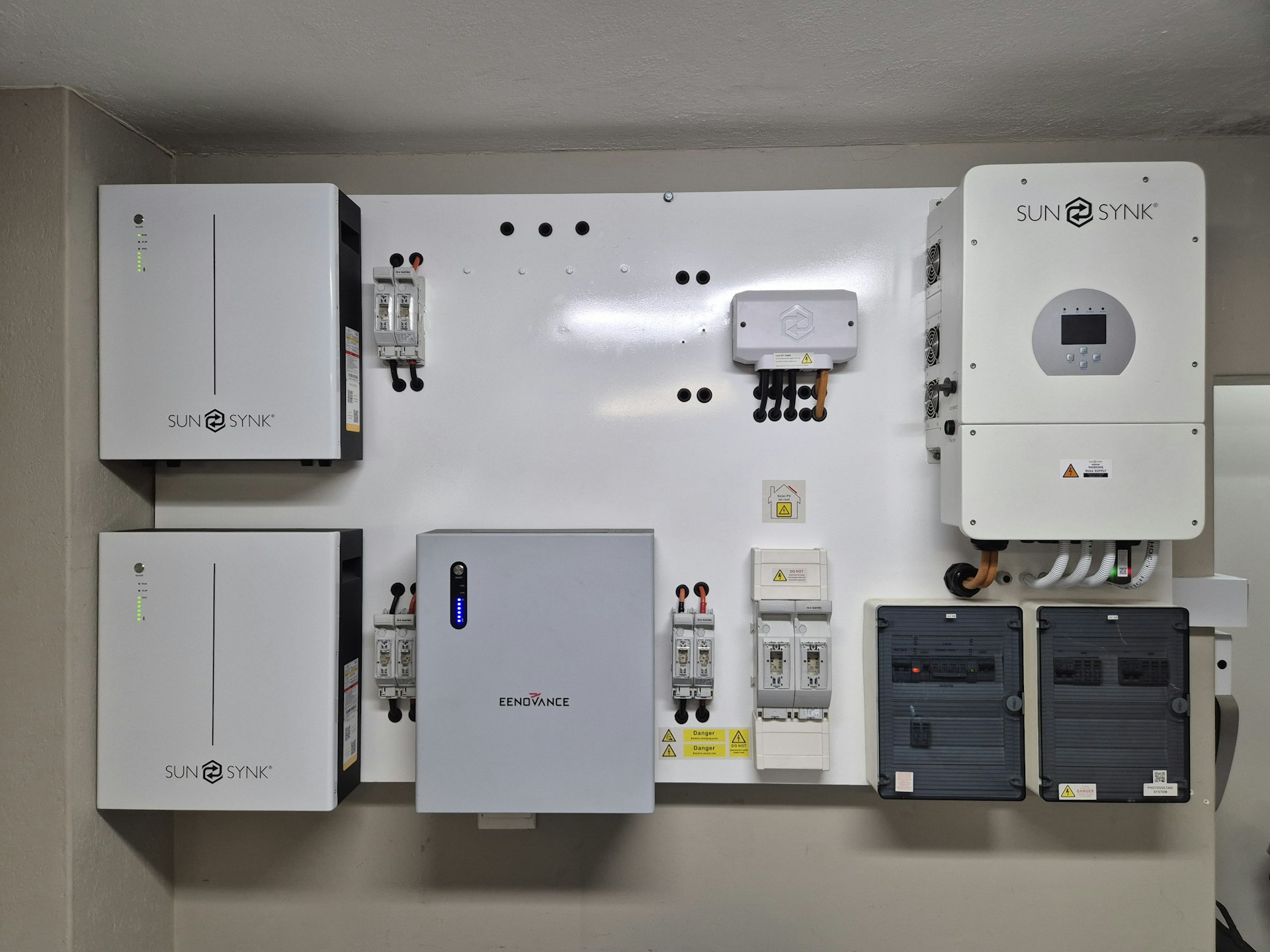
The discount comes through small-scale technology certificates (STCs). Each kWh of usable battery capacity earns a set number of certificates, which your installer usually claims and takes off your quote. The Clean Energy Regulator says the factor is adjusted as battery costs fall, so the discount stays equivalent to around 30% of the upfront installation cost (Clean Energy Regulator).
Some conditions matter before you get quotes. Only one battery per premises can claim STCs, batteries must have a nominal capacity between 5 kWh and 100 kWh, only the first 50 kWh of usable capacity earns certificates, and the battery and inverter must be capable of joining a virtual power plant (VPP) (Clean Energy Regulator).
What the 1 January 2027 step-down means
The STC factor now falls every six months until the program ends in 2030. The table shows certificates earned for two common battery sizes, using the Regulator’s published factors and size tiers, rounded down per tier as in the Regulator’s own worked example.
| Installed | STC factor per kWh | 10 kWh usable battery | 20 kWh usable battery |
| May to December 2026 | 6.8 | 68 STCs | 119 STCs |
| January to June 2027 | 5.7 | 57 STCs | 99 STCs |
| July to December 2027 | 5.2 | 52 STCs | 90 STCs |
To turn certificates into dollars, multiply by the STC price in your quote, which moves with the market. The point is the trend: a battery installed in January 2027 earns about 16% fewer certificates than the same battery installed in December 2026. The Regulator warns retailers not to rush installations to beat the change, and to quote honestly about which period applies (Clean Energy Regulator, March 2026).
Payback maths, with the assumptions shown
There is no single savings figure that fits every home, so here is the method with one illustrative set of numbers. Replace each assumption with your own bill and quote.
- Assumption 1: a 10 kWh usable battery that shifts 8 kWh a day of your own solar into the evening.
- Assumption 2: without the battery, that 8 kWh would be exported at 5c/kWh.
- Assumption 3: the evening electricity it replaces would cost 35c/kWh. This is an example rate, not a CovaU price; check your own bill.
- Assumption 4: a net installed price of $7,000 after the STC discount. This is an example only; get real quotes.
Daily benefit: 8 kWh x (35c minus 5c) = $2.40. Yearly: $2.40 x 365 = about $876. Simple payback: $7,000 divided by $876 = about 8 years. If your evening usage is lower, your export rate higher, or your net price higher, payback stretches. If you also earn VPP credits or use a plan that pays more for evening exports, it shortens.
Two cautions. Batteries lose a little capacity each year, so savings in year 10 will be lower than in year 1. And a battery sized for the biggest discount is not always the one that saves most: if you cannot fill and empty it most days, extra kWh add cost without adding savings.
How CovaU can help
A battery earns more when the plan around it is designed for batteries. As at October 2026, CovaU’s VPP Plan in NSW and VIC pays a bill credit for each dispatch event while keeping at least a 20% battery reserve, with no lock-in. Check your model first on the compatible battery list, which covers 11 brands and about 390 models, including AlphaESS, SUNGROW, FoxESS and GROWATT.
For solar exporters, SolarMax pays 15c/kWh (GST exclusive) for exports from 6pm to 9pm, up to 30 kWh a day, and 5c/kWh for other exports, with $0/kWh usage from 11am to 2pm up to 50 kWh a day. Customers with controlled load can look at Powerbreak, which pays 15c/kWh in bill credits per grid event. CovaU is rated 4.6 out of 5 on ProductReview.com.au from 2,644 reviews as of October 2026.
Frequently asked questions
Is a home battery worth it in Australia?
It depends on how much solar you export, how much power you use in the evening, and your net price after the federal discount. Many households use a simple payback calculation like the one above to compare quotes.
When does the battery rebate drop?
The STC factor falls from 6.8 to 5.7 per kWh for batteries installed from 1 January 2027, then to 5.2 from 1 July 2027, according to the Clean Energy Regulator.
Does the battery discount depend on when I sign or when it is installed?
The installation date. The Clean Energy Regulator says rebates are set by the installation date, not when a contract is signed.
Can I join a VPP with any battery?
Batteries claiming the federal discount must be VPP-capable, but each VPP has its own list. CovaU’s list covers 11 brands and about 390 models as at October 2026.
Sources
- Clean Energy Regulator: Calculate small-scale technology certificate entitlements
- Clean Energy Regulator: Battery rebates are changing 1 May 2026, 18 March 2026
- Clean Energy Regulator: Solar batteries
- Clean Energy Regulator: Quarterly Carbon Market Report June Quarter 2026, Consumer energy resources
- CovaU: Solar and battery, VPP Plan and Powerbreak
- CovaU: Is my battery compatible with CovaU’s VPP program?
- CovaU: SolarMax price plan, NSW QLD SA
- ProductReview.com.au: CovaU reviews
About CovaU Energy
CovaU Energy is a 100% Australian-owned company providing electricity and gas to homes and businesses across Australia. We offer competitive energy plans, top-rated 24/7 customer service, and no lock-in contracts. We also have incredible rewards for our new and existing customers. For more information about our electricity and gas plans, call 1300 111 688 to talk to our energy specialists or request a quote for the rates in your area. You may also compare plans and sign up here directly.